
A day that feels supported.
Every support plan is personal. This sample shows how Colorado Homestead Care can help turn scattered needs into a calmer rhythm at home.

We build around the person, the family, the home, and the routines that already matter.
This is only an example. Colorado Homestead Care provides non-medical in-home support. Every plan is personalized after a conversation with the family and should not replace medical, emergency, or clinical care.

Meet the family in this sample plan
This example is based on a common situation: an older adult wants to remain at home, and the family wants help creating more stability, connection, and relief during the week.
What the support plan might include
The best care plans are not just task lists. They create a steady rhythm that supports independence, dignity, and family peace of mind.
Companionship and connection
Conversation, shared activities, walks, coffee, hobbies, or time spent doing something meaningful together.
Light household routines
Support with simple home routines such as laundry, tidying, organizing, and keeping the day from feeling overwhelming.
Errands and community
Support for groceries, pharmacy stops, appointments, local outings, or staying connected to familiar places.
Caregiver relief
Planned time for family caregivers to rest, work, run errands, or simply have breathing room.
Routine reminders
Gentle support around daily rhythm, meals, hydration, appointments, and familiar routines without taking over.
Family communication
Simple updates after visits so family members know what happened, what went well, and what may need attention.
A supported day can still feel like your day
Support can include the routines, interests, and small joys that make life feel familiar. The right plan is not just about getting things done. It is about helping the person stay connected to what they enjoy.

Time in the garden
Watering herbs, tending flowers, or simply enjoying fresh air and a familiar outdoor space.

Creative moments
Painting, crafts, music, puzzles, photos, or hobbies that bring connection and joy into the day.

Community outings
Farmers markets, errands, coffee, library visits, or returning to favorite places in the community.
Home rhythms
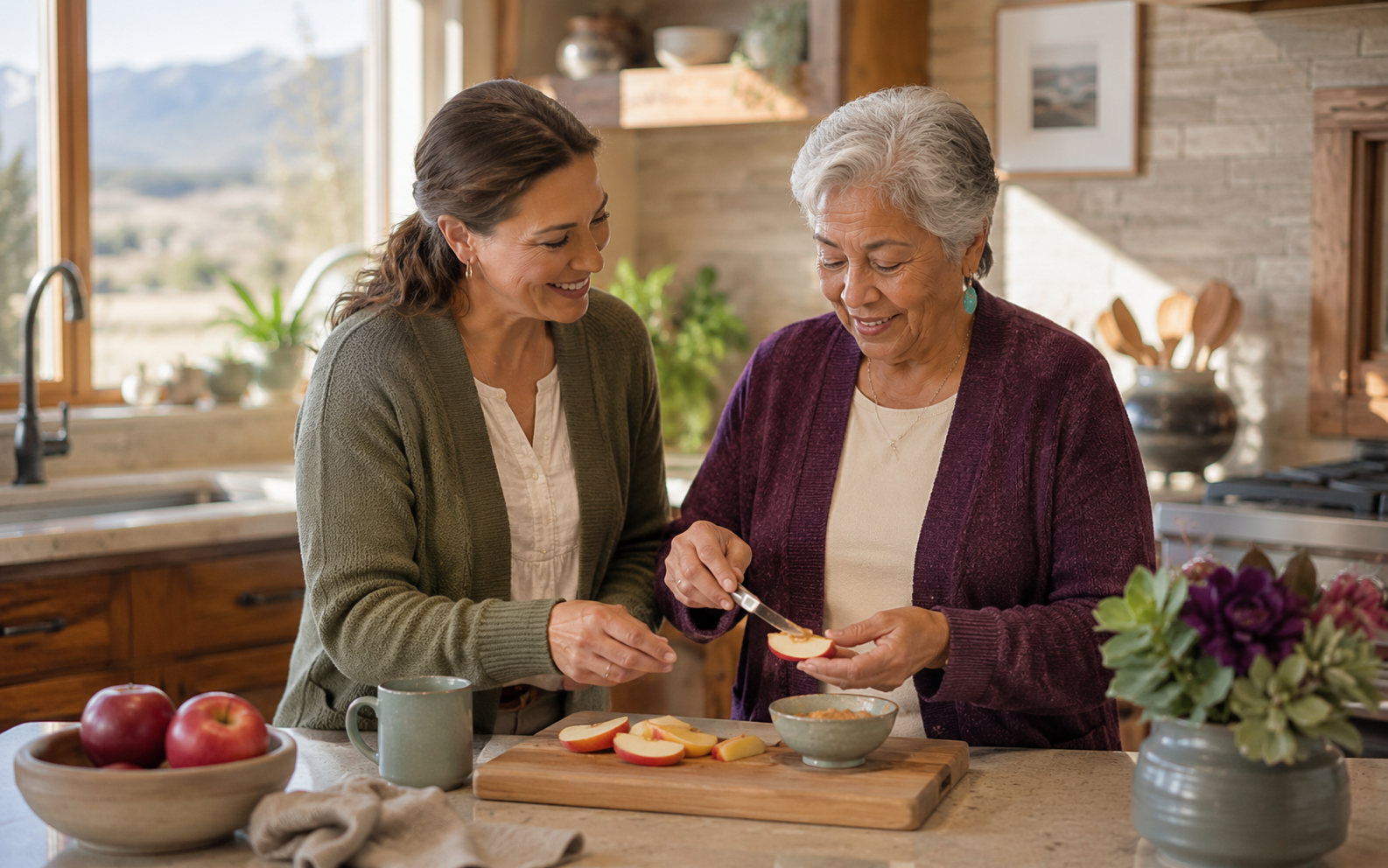
Simple snacks, light routines, organizing, and the ordinary comforts that help home feel settled.
What one supported day could look like
This sample day shows how support can feel calm and natural. The goal is not to make the day busy or task-focused. The goal is to make it feel steadier, safer, more connected, and still full of ordinary life.
Timing, visit length, and activities are always adjusted around the person and the family.
Warm arrival and gentle check-in
The visit begins with conversation, noticing how the morning is going, and easing into the day without rushing.
- Friendly check-in and conversation
- Review the plan for the visit
- Notice anything the family may want to know
Light home rhythm
Support focuses on small routines that help home feel more settled and manageable.
- Start a load of laundry or fold clean items
- Tidy the kitchen or main living area
- Help organize items needed for the day
Connection and activity
The visit includes something enjoyable and personal, not just a list of tasks.
- Paint, garden, work on a puzzle, or look through photos
- Take a short walk, sit outside, or spend time with a pet when appropriate
- Encourage conversation, creativity, and meaningful engagement
Errands or simple outing
If planned, support may include a community errand or familiar outing that helps life feel normal.
- Grocery, farmers market, or pharmacy stop
- Coffee, library, garden center, or community visit
- Support getting out, enjoying the outing, and returning home comfortably
Settle back in
The visit ends with the home feeling calm and the next step clear.
- Put away groceries or organize outing items
- Make sure important items are within reach
- Leave a simple update for family when requested
Family update
Family communication helps everyone feel less in the dark.
- Share what went well
- Note any changes or concerns
- Confirm the next visit plan
Support should make things feel clearer
Families often feel better when there is a rhythm, a plan, and someone paying attention to the small details of daily life.
We help create support that feels personal without making the home feel clinical or unfamiliar.
Built around the person
Support begins with preferences, routines, strengths, and what the person wants home to feel like.
Designed for the family
We consider caregiver stress, family communication, and how support can make life feel more manageable.
Flexible as needs change
A plan can shift as routines, goals, and family needs change over time.
Want help building a plan for your family?
Tell us what is happening, what feels hard right now, and what you hope home can continue to feel like.
A day that feels supported.
Every support plan is personal. This sample shows how Colorado Homestead Care can help turn scattered needs into a calmer rhythm at home.
We build around the person, the family, the home, and the routines that already matter.
This is only an example. Colorado Homestead Care provides non-medical in-home support. Every plan is personalized after a conversation with the family and should not replace medical, emergency, or clinical care.
Meet the family in this sample plan
This example is based on a common situation: an older adult wants to remain at home, and the family wants help creating more stability, connection, and relief during the week.
What the support plan might include
The best care plans are not just task lists. They create a steady rhythm that supports independence, dignity, and family peace of mind.
Companionship and connection
Conversation, shared activities, walks, coffee, hobbies, or time spent doing something meaningful together.
Light household routines
Support with simple home routines such as laundry, tidying, organizing, and keeping the day from feeling overwhelming.
Errands and community
Support for groceries, pharmacy stops, appointments, local outings, or staying connected to familiar places.
Caregiver relief
Planned time for family caregivers to rest, work, run errands, or simply have breathing room.
Routine reminders
Gentle support around daily rhythm, meals, hydration, appointments, and familiar routines without taking over.
Family communication
Simple updates after visits so family members know what happened, what went well, and what may need attention.
A supported day can still feel like your day
Support can include the routines, interests, and small joys that make life feel familiar. The right plan is not just about getting things done. It is about helping the person stay connected to what they enjoy.
Time in the garden
Watering herbs, tending flowers, or simply enjoying fresh air and a familiar outdoor space.
Creative moments
Painting, crafts, music, puzzles, photos, or hobbies that bring connection and joy into the day.
Community outings
Farmers markets, errands, coffee, library visits, or returning to favorite places in the community.
Home rhythms
Simple snacks, light routines, organizing, and the ordinary comforts that help home feel settled.
What one supported day could look like
This sample day shows how support can feel calm and natural. The goal is not to make the day busy or task-focused. The goal is to make it feel steadier, safer, more connected, and still full of ordinary life.
Timing, visit length, and activities are always adjusted around the person and the family.
Warm arrival and gentle check-in
The visit begins with conversation, noticing how the morning is going, and easing into the day without rushing.
- Friendly check-in and conversation
- Review the plan for the visit
- Notice anything the family may want to know
Light home rhythm
Support focuses on small routines that help home feel more settled and manageable.
- Start a load of laundry or fold clean items
- Tidy the kitchen or main living area
- Help organize items needed for the day
Connection and activity
The visit includes something enjoyable and personal, not just a list of tasks.
- Paint, garden, work on a puzzle, or look through photos
- Take a short walk, sit outside, or spend time with a pet when appropriate
- Encourage conversation, creativity, and meaningful engagement
Errands or simple outing
If planned, support may include a community errand or familiar outing that helps life feel normal.
- Grocery, farmers market, or pharmacy stop
- Coffee, library, garden center, or community visit
- Support getting out, enjoying the outing, and returning home comfortably
Settle back in
The visit ends with the home feeling calm and the next step clear.
- Put away groceries or organize outing items
- Make sure important items are within reach
- Leave a simple update for family when requested
Family update
Family communication helps everyone feel less in the dark.
- Share what went well
- Note any changes or concerns
- Confirm the next visit plan
Support should make things feel clearer
Families often feel better when there is a rhythm, a plan, and someone paying attention to the small details of daily life.
We help create support that feels personal without making the home feel clinical or unfamiliar.
Built around the person
Support begins with preferences, routines, strengths, and what the person wants home to feel like.
Designed for the family
We consider caregiver stress, family communication, and how support can make life feel more manageable.
Flexible as needs change
A plan can shift as routines, goals, and family needs change over time.
Want help building a plan for your family?
Tell us what is happening, what feels hard right now, and what you hope home can continue to feel like.